


What is Vastu Shastra? Science or Superstition?

Updated: Jul 24
Introduction
If you've ever mentioned buying a plot or renovating a home to an older relative, you've probably heard some version of "check the Vastu first." Ask a friend with an engineering or architecture background about the same topic, and you'll likely get an eye roll and the word "superstition."
That's the honest answer to what is Vastu Shastra, science or superstition: it's not fully one or the other. Some of it is grounded in real design logic. Some of it is belief, and this article breaks down exactly which is which.
What is Vastu Shastra?
Vastu Shastra translates to "science of dwelling," and it's a traditional Indian system for planning buildings, homes especially, based on direction, layout, and natural forces like sunlight and airflow. It comes from ancient Sanskrit texts such as the Manasara and Mayamata, written long before architects existed as a profession.
Back then, most people built their own homes with help from their community, not a trained designer. These texts worked as shared, practical guidance so that ordinary builders could still get the basics right: enough light, decent airflow, a structurally sound layout.

The Origin of Vastu Shastra
Vastu Shastra is believed to be several thousand years old, developed for a specific climate and way of life in ancient India. That context is worth remembering every time you come across a Vastu rule, because some guidelines still hold up perfectly well today, while others were written for conditions that simply don't exist anymore, like unlimited open land or homes with no electricity or mechanical cooling.
What "Science of Dwelling" Actually Means
When these texts use the word "science," they don't mean it the way we use it now, with hypotheses, controlled experiments, and peer review. They mean something closer to organized, tested-by-experience knowledge, refined over generations of actually living in these buildings.
Some of that experience-based knowledge lines up with what modern building science later proved independently. Some of it doesn't, and was never meant to be tested that way in the first place. Keeping that distinction in mind makes the rest of this article, and honestly any Vastu advice you come across, much easier to evaluate.
The Five Elements of Vastu Shastra (Pancha Mahabhutas)
Vastu is built on the idea that everything, including your home and your own body, is made up of five natural elements. This isn't unique to Vastu; ancient Greek and Chinese philosophy had similar elemental systems. What makes Vastu different is that it turned this idea into an actual set of construction guidelines.
The five elements are:
Earth (Prithvi), linked to stability, and traditionally guiding where the heaviest, most solid parts of a structure should sit.
Water (Jal), linked to flow and calm, and used to decide where water bodies, wells, or overhead tanks should be placed.
Fire (Agni), linked to energy and transformation, which is why kitchens are traditionally positioned with this element in mind.
Air (Vayu), linked to movement and breath, guiding window and ventilation placement.
Space (Akash), linked to openness, often associated with the central, unobstructed part of a home.
The underlying logic is balance. A home is considered "off" in Vastu terms not because one element is present, but because the elements are working against each other, heavy structure sitting where it should be open, or a water feature placed somewhere it can't drain properly.
What is the Vastu Purusha Mandala?
Before any Vastu-based construction begins, the site is mapped using a grid called the Vastu Purusha Mandala, traditionally a 9x9 arrangement of 81 squares laid over the plot.
The name comes from "Purusha," a symbolic being said to occupy the site, representing the idea that a building isn't just a static structure, it's something that responds to how it's arranged, almost like a living system. Each square in the grid is assigned to a direction, an element, or a purpose, and together they form the blueprint for where different rooms and functions should go.
If you set the symbolism aside for a moment, the Mandala is essentially an early version of what architects today call site zoning, dividing a plot logically before deciding what goes where. That practical core is exactly why many contemporary architects still find value in it, even the ones who wouldn't call themselves Vastu believers.

Vastu Shastra: Science or Superstition? The Real Debate
This is where most articles either overclaim or dismiss too quickly. The truth is that credible people sit on both sides of this argument, and it's worth understanding what each side is actually saying.
The case for science: Several architects and researchers point out that Vastu's directional guidelines for kitchens, bedrooms, and open spaces line up closely with real building principles, sunlight exposure, airflow, and heat management among them. Many practicing architects also argue that what sounds "spiritual" in these old texts is often just older, more symbolic language for practical design advice. This overlap has been documented directly in a peer-reviewed IJERT study on Vastu Shastra and architecture.
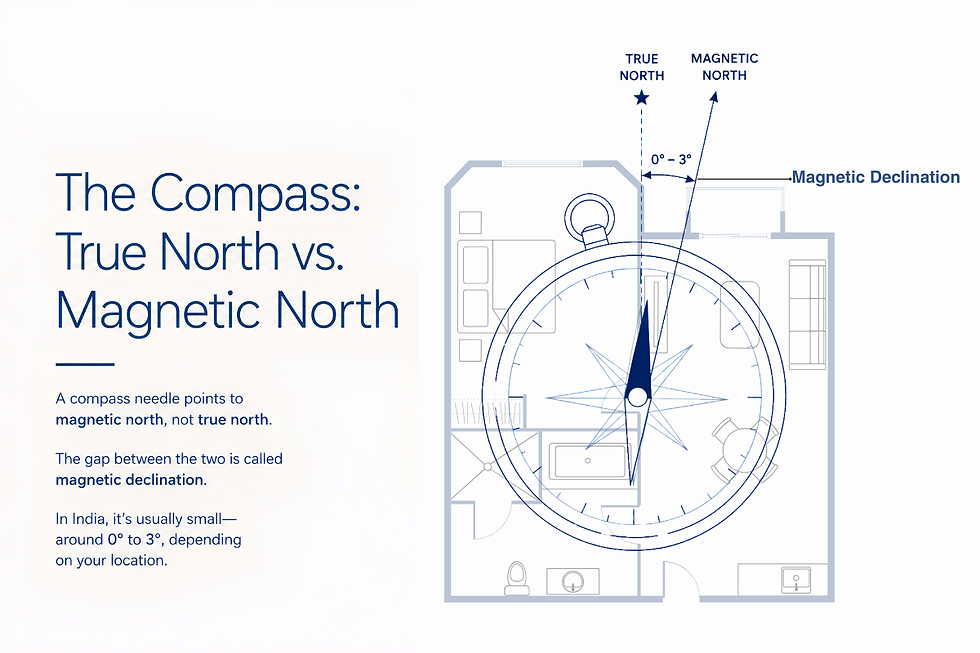
The case for skepticism: On the other side, respected scientists have pushed back hard. Astrophysicist Jayant Narlikar argued that several Vastu claims have no logical connection to real outcomes at all, pointing to examples like the belief that a triangular plot invites government trouble, or that a boundary slightly off from magnetic north brings bad luck. Critics also point out a real, ongoing problem: some modern consultants borrow scientific-sounding language to make unverifiable claims feel more credible than they actually are. This side of the debate is covered in more depth in a Business Standard feature on the science behind Vastu Shastra.
Neither side is wrong. That's exactly why treating all of Vastu as one single thing, either fully legitimate or fully fake, misses what's actually going on. The next two sections break down specifically where each side has a point.
Where Vastu Principles Hold Up Scientifically
Vastu Guideline | What It Recommends | Why It Holds Up |
Entrance and window orientation | East or northeast-facing openings | Captures gentle morning light instead of harsh afternoon heat |
Window and open space placement | North and east-facing windows | Supports natural cross-ventilation and better indoor air quality |
Heavier structures placement | Southwest and south walls | Acts as a thermal buffer against the strongest, most direct sun |
Load and drainage planning | Elevated southwest, open northeast | Improves structural stability and water runoff |
These aren't coincidences. Long before anyone had the word "passive design," people building homes without air conditioning had strong practical reasons to notice which direction kept a room cooler, and which side of a plot flooded first.
Where Vastu Enters Belief, Not Evidence
Not everything in Vastu earns this kind of scientific backing, and it's worth saying that plainly instead of stretching an explanation to fit.
Claims that a specific plot shape brings bad luck, that a room placement affects your wealth or relationships, or that a slight compass misalignment causes vague "negative energy," fall outside anything that can currently be measured or tested. These ideas come from a genuine symbolic and spiritual tradition, and they can carry real cultural meaning. What they shouldn't do is get marketed to you as a scientifically proven fact, because that's simply not an honest claim.
Common Mistakes People Make With Vastu
Following rules without context. A guideline written for a large standalone home in one climate doesn't automatically apply to a compact apartment in a different city or region.
Making decisions out of fear rather than facts. Some homeowners spend heavily on structural changes because of vague warnings about bad energy, without ever understanding why a rule exists or whether it even applies to their situation.
Treating every rule as equally provable. Sunlight and ventilation guidance sits on solid ground. Luck and fortune claims don't. Mixing the two together makes it much easier to be misled by someone selling advice rather than giving it.
Practical Takeaways: Applying Vastu Sensibly
Most everyday Vastu concerns don't need construction to fix. A few simple, reversible vastu tips, decluttering the center of a room, adjusting furniture, improving lighting, or shifting to lighter wall colors, solve a lot of what people worry about day to day. That said, every home has a different layout, and Vastu works differently depending on your plot, structure, and surroundings, so it's worth booking a vastu professional consultation before making any changes, rather than relying on a general vastu guide in place of an assessment specific to your space.
Frequently Asked Questions
Is Vastu Shastra proven by science?
Partly. Principles connected to sunlight, airflow, and thermal comfort match established building science. Claims connected to luck, wealth, or fortune don't have any scientific backing.
Is Vastu Shastra tied to a specific religion?
It comes from ancient Hindu texts, but its core design ideas, direction, ventilation, and layout, are practical rather than religious, and can be applied by anyone regardless of belief.
Do I need to demolish my house to fix a Vastu issue?
No, in most cases. A lot of what looks like a serious Vastu problem can actually be resolved through smaller shifts, like how a room is arranged or used, rather than tearing down a wall. Demolition tends to be a last resort, not a default fix.
Can Vastu and modern architecture work together?
Yes. Many architects incorporate Vastu's directional and spatial logic during the planning stage, alongside modern design requirements and building codes.
Is Vastu Shastra relevant outside India?
The underlying design logic, sunlight, airflow, structural balance, applies anywhere. Its symbolic and directional guidelines, however, were shaped specifically around India's climate and geography, and weren't calibrated for other regions.
Key Takeaways
Vastu Shastra is a mix of genuine design logic and symbolic tradition, not one single thing that's entirely true or entirely false.
Sunlight orientation, airflow, thermal comfort, and structural planning are the areas where Vastu holds up under real scrutiny.
Claims tied to luck, wealth, or fortune fall outside what can currently be tested or measured.
Most practical Vastu concerns can be resolved without demolition, through furniture, color, and layout adjustments.
A professional opinion matters most before structural decisions, not after.
Conclusion: So, Is It Science or Superstition?
Neither label fits the whole picture, and that's genuinely the honest answer. Vastu Shastra blends real design logic with symbolic tradition, and the two aren't always easy to tell apart without the right context.
The parts grounded in sunlight, airflow, and structure deserve to be taken seriously, because good architecture has arrived at similar conclusions independently, again and again. The parts rooted in belief deserve respect as tradition, not authority over major decisions about your home.
The real value in understanding Vastu isn't choosing a side, it's knowing which questions are worth asking before you build, renovate, or move into a space. If you want a grounded read on your own home, one that separates useful design logic from unverifiable claims, browse Hourly.Design's experts before making decisions you'll be living with for years.

Comments