


East Zone: Social Connections and Government Support

Ask a Vastu consultant which part of the home is tied to your standing in the world, and the answer is almost always the east. Vastu treats the east zone as the public-facing side of a home: how easily people reach you, how you're received at work and in your community, and how smoothly things go when you deal with offices, officials and paperwork. That's the east zone's link to social connections and government support, and it's a very different job from the wealth corner covered in our north zone guide
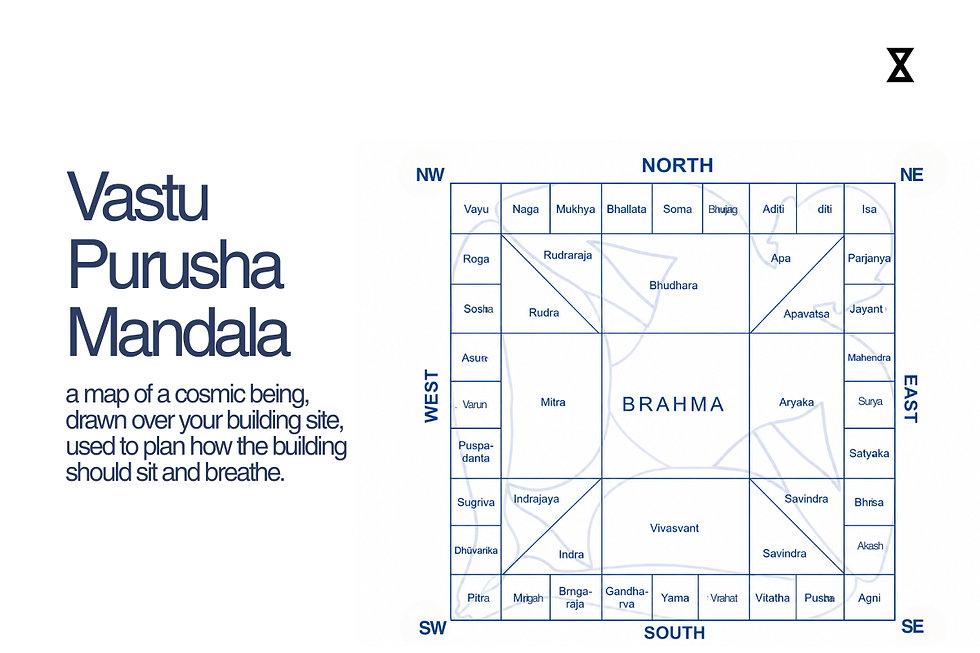
This guide stays practical. It covers what the east zone is, what it means in daily life, which rooms belong there and which don't, the defects that come up most, and fixes that don't need construction. For the bigger picture of how Vastu maps a home, our guide to the Vastu Purusha Mandala explains the grid behind every direction.
One honest note before we start: Vastu describes supportive conditions, not guaranteed outcomes. A well-kept east zone won't replace preparation or good timing. It's meant to remove friction, not manufacture results.
East Zone at a Glance
Aspect | Association |
Direction | East (Purva), where the sun rises |
Ruling deity | Indra, king of the gods |
Ruling planet | Sun (Surya) |
Element | Air, in most Vastu guides |
Best colors | White, light yellow, pale cream, soft green |
Avoid | Black, dark brown, other heavy dark shades |
Governs | Social standing, recognition, relationships with people and authorities, vitality, fresh starts |
Best uses | Main entrance, living room, study, balcony or verandah |
Finding Your East Zone
Stand at the center of your home and take a compass reading. Then divide your floor plan into a 3x3 grid with north at the top. The middle cell of the eastern column is your east zone, and the cells above and below it are the northeast and southeast. If you want a reading you can trust, including a correction most people skip, our compass guide walks through it step by step.
One quick clarification: the east zone exists in every home, whichever way the main door faces. An east-facing house is a different question (it’s about the entrance), and the northeast is its own zone, covered in our north-east guide.
Strengthening the Sun’s Energy in Your East Zone
The east belongs to the Sun, and in Vedic tradition the Sun stands for authority, vitality and visibility. So strengthening the east comes down to two things: letting the Sun in, and showing it some respect. None of this needs construction.
Start with the light itself
Open the east-facing windows as soon as you wake up, swap heavy curtains for sheers, and trim any branch or hanging item that blocks the window. A remedy placed in a dark east corner does very little, while a bare, bright one does more.
Offer water to the rising sun
This is the best-known Surya practice in Indian homes, often called Surya Arghya. Stand facing east soon after sunrise and pour a small stream of water from a clean copper vessel, ideally with a short mantra such as “Om Suryaya Namah”. It also gets you into morning daylight every day. Don’t stare directly at the sun while doing it.
Add copper, a sun motif and a morning routine
Copper is traditionally linked with the Sun, so a copper vessel or small copper bowl on the east side fits well, along with a bright rising-sun artwork on an east wall. A touch of warm gold or soft orange in a cushion is also commonly used. Keep accents small and light, since the zone’s palette stays white, cream, light yellow and soft green. Pair this with a habit that matches the intent, such as Suryanamaskar, a short walk or tea by the east window.
Keep the zone unobstructed
Don’t stack boxes or bulky furniture against the east wall or window, and keep the main entrance clear if it falls on this side.
These are traditional practices that support the zone, not guarantees. Think of them as ways to make the east feel bright and cared for.

Why the East Zone Governs Social Connections and Government Support
In Vastu, the east is Indra's direction. Indra is the king of the gods in Hindu tradition, so the east is linked with authority, leadership and standing, while the accumulation of money belongs to Kubera in the north. Vastu pairs Indra with the Sun, which in Vedic astrology is the classic marker of authority, visibility and state power. That pairing is the traditional reasoning behind the east zone's link to social connections and government support: it's the direction of recognition, where you are seen and where officialdom is said to notice you.
The idea of giving every direction its own guardian comes from the Vastu Purusha Mandala, the same grid Vastu uses to map a home. Indian temple builders worked from that framework too, and many temples were oriented east so the first light of sunrise reached them. Source: IJERT, Iconography and Symbolism in Indian Temple Architecture.
There's also an everyday reason a bright east side makes sense. A 2025 study of 1,762 adults found that every extra 30 minutes of morning sun before 10 a.m. was associated with a sleep midpoint about 23 minutes earlier, along with better overall sleep quality scores. It was a self-reported, cross-sectional study, so it shows an association and not proof of cause, and it says nothing about careers or government work. Still, a body clock anchored in morning daylight is a sensible base for days when you need to be sharp. Source: BMC Public Health, 2025.
What This Looks Like in Daily Life
Mythology only matters if it changes how you use the space. Here's how the east zone's reputation translates into everyday choices.
Social connections
Vastu reads a bright, open, welcoming east as a home that lets people in: guests, neighbours, colleagues, community. In practical terms, that means:
A clear, well-lit entrance that feels inviting rather than guarded
Hosting space on the east side, such as a living room or sit-out where visitors naturally gather
Fewer physical barriers between your home and the outside world: no stacked shoe racks, bins or storage blocking the approach
Government and official matters
The Sun and the east are traditionally linked with authority and institutions, which is why people turn to this zone for anything involving offices, officials and paperwork. If you have the choice, Vastu guides suggest:
Doing application and documentation work in the brightest part of the home, ideally at a desk near an east-facing window
Preparing for government exams or interviews in a clutter-free, well-lit east-side study
Keeping official files organised and easy to reach, so the zone feels orderly and not chaotic
No Vastu change speeds up how an office processes your file. What this zone can do is give you a calm, organised, well-lit base to work from.
Which Rooms and Spaces Belong in the East Zone
Space | Why It Works |
Main entrance | An east-facing door is one of the most favored entrance directions across Vastu guides, tied to fresh opportunity and goodwill |
Living or drawing room | The natural hub for guests and social circulation. Guides vary on whether it sits on the east, north or northeast side |
Study or home office | Morning light supports focus, which suits exam preparation and official work |
Balcony, verandah or garden | Open space on the east side is widely recommended, since it keeps the zone light and open |
Which Rooms and Things to Avoid in the East Zone
Avoid | Why |
Heavy storage, tall cupboards, bulky furniture | The east is meant to stay light and open. Guides generally place heavier elements toward the west and south |
A staircase | Guides commonly advise placing stairs in the south or west instead |
Kitchen | Most guides prefer the southeast or northwest, and keep the east for open, social use |
Toilet or bathroom | Commonly discouraged in the east. Guides usually steer bathrooms to the northwest or southeast, though traditions vary on this |
A sealed-off balcony or junk room | Anything that blocks morning light works against the whole point of the zone |
Common Vastu Doshas in the East Zone, and How to Fix Them
A "dosha" is simply a Vastu defect, a way the space works against its intended purpose. These are the ones that come up most:
Dosha | The Problem | The Fix |
East side closed in by walls or construction | Cuts off the light and openness the zone depends on | Open up a window, balcony or verandah, and keep whatever opening exists clear |
Heavy storage or bulky furniture | Makes a zone meant to feel open feel weighed down | Move tall units to the west or south wall and use low, light pieces in the east |
Blocked or permanently curtained window | No morning light means no benefit | Open curtains daily, swap heavy drapes for sheers, and trim outdoor growth |
Dark or heavy wall colors | Fights the zone's bright character | Repaint in white, light yellow, cream or soft green |
Clutter at the east-facing entrance | Undercuts the first impression and the welcome | Clear shoes, boxes and bins, and add good lighting |
Supporting the east zone's role in social connections and government support rarely takes construction. Start with the cheapest fix first: clear it, light it, and only then decorate it. If your home faces another direction entirely, our guide to north vs south facing houses covers how orientation changes a layout, and our 3 simple Vastu tips for instant positivity are a good starting point for quick wins.

Design Elements That Work Well in the East Zone
Vastu gives the brief: bright, light and open. Good design turns that brief into specifications. An east-facing room gets low, warm sun in the morning and flatter, cooler light later in the day, so every choice below is about making the room work across both, not just at sunrise.
Element | Specification | Why It Works |
Walls | Matte or eggshell finish in warm white, cream or pale butter yellow, with a light reflectance value (LRV) of roughly 60 or above | Pushes daylight deeper into the room, and a warm undertone stops the afternoon light from turning cold and flat |
Flooring | Light-toned tile, stone or pale timber, with no dark stone or raised platform in this zone | A lighter floor bounces light upward, and many Vastu guides also prefer the east kept low and free of raised structures |
Window treatment | A sheer layer plus an adjustable second layer, such as a light-filtering roller blind | Lets you open fully for morning light and cut low-angle glare when you need to |
Lighting | Dimmable layers: ambient at 2700 to 3000K for evenings, task lighting at around 4000K with a high CRI (90 or above) for desks | Follows the daylight through the day and keeps work areas accurate and comfortable |
Furniture | Slim profiles, raised legs, pale woods, cane or rattan | Visible floor beneath furniture keeps the zone looking and feeling light |
Metals and accents | Gold-toned metals such as brass or copper, in small doses | Traditionally associated with the Sun in Vedic practice |
Treat the entrance as the first design moment. This zone is about how people are received, so put real design effort into the threshold. Use warm lighting (2700 to 3000K) with a lit nameplate, a light-toned door finish, a low console or bench off the walking line, and closed, low shoe storage tucked to one side so nothing blocks the approach. A mirror on a side wall helps bounce light into the entry, but keep it from facing the door directly.
Plan the living area for conversation, not just the view. Group seating so guests can talk comfortably across about 2.5 to 3 metres, keep a clear walkway of roughly 90 cm from the door to the seating, and add flexible extras like poufs or ottomans for unannounced visitors. Keep tall units such as bookcases, wardrobes and the TV wall on the west or south side of the room, so the window wall and the sightline to it stay open.
Set up the desk for glare, not just direction. In a study or home-office nook, place the desk at a right angle to the east window so morning sun doesn't hit the screen or page head-on. Add a task light on the side opposite your writing hand, and keep the surface limited to what you're working on that day.
Test your colors in both lights. Paint swatches on the east wall and check them at 8 a.m. and again at 4 p.m. before committing. A white that looks fresh in the morning can read gray by the afternoon, and a warm white or soft yellow holds up better in both.
Choose accents that reflect light instead of absorbing it. A sunburst mirror, a pale abstract sunrise artwork, glass and brass accessories all suit the zone. Skip heavy, dark or oversized ornaments, which are exactly what Vastu guides advise against here.
Use plants with discipline. Healthy broad-leaf plants at sill or floor level, placed beside the window and not in front of it, keep the zone green without blocking light. Tulsi is commonly placed on the east or northeast side of a home, such as a balcony or courtyard. Vastu guides generally discourage thorny plants and dried arrangements indoors, so keep everything fresh and tidy.
Expert Insight: When a Vastu Consultant Actually Helps
Most east zone issues come down to the basics above: light, clutter and placement. It's worth bringing in a professional when your layout is fixed, for example a staircase that can't move, an east wall shared with a neighbour, or a plot with little or no east exposure. Even among guides, the best position for an east-facing door along the wall isn't agreed on, which is a good reason to have someone read your actual plan. A consultation with a Hourly.Design Vastu expert tells you which fixes will realistically make a difference and which are just for peace of mind.
FAQs
Is an east-facing entrance better than a north-facing one?
Both are considered auspicious, so neither is a clear winner. Vastu links the east with recognition and standing, and the north with wealth and opportunity. Daylight, layout and plot conditions usually matter more than ranking the two.
Which direction should I face while studying for a government exam?
Most Vastu guides recommend facing east or north while studying, since both are associated with focus and clarity. If your desk can't be turned, a bright lamp and a clutter-free surface will do more for you than the compass angle.
How do I apply east zone Vastu in a rented flat or apartment?
Focus on what doesn't need permission to change: open the east window fully, use light-colored textiles and decor, keep the entrance clear, and move heavy furniture away from the east wall. Color, lighting and furniture changes matter more here than structural ones.
Can I put a mirror in the east zone?
Yes, mirrors are commonly recommended on the north and east walls because they bounce light around the room. Avoid placing one facing the bed or the main door, and keep it clean and uncracked.
What if a tall building or wall blocks my east side?
It's common in dense housing and isn't treated as fatal. Keep east-facing rooms bright with light colors, sheer curtains and good interior lighting, and make the most of whatever morning light does reach the space.
Key Takeaways
Vastu ties the east zone to standing, recognition and dealings with authority, through Indra and the Sun.
It's the public-facing zone, different from the north zone, which is tied to wealth and savings.
Keep the east open, bright and uncluttered, especially around the entrance and window.
Best uses: entrance, living room, study, balcony. Avoid heavy storage, a staircase, a kitchen or a toilet here.
Best colors: white, light yellow, pale cream, soft green. Avoid black and dark brown.
Most issues are fixable without construction: declutter, repaint, open up the light.
Conclusion
Strip it back and the east zone's promise of social connections and government support comes down to two things: keep this part of the home open to people, and keep it open to light. Vastu frames that as Indra's domain. The practical steps are the same either way: clear the entrance, protect the window, and keep heavy things out of the way.
If your layout makes that harder than it sounds, from a fixed staircase to a plot with little east exposure, a professional read of your specific space usually saves more time than trial and error. You can browse Hourly.Design's Vastu experts whenever you're ready for that kind of second opinion.

Comments